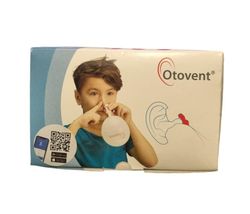
Otovent should not be used during an episode of acute otitis media or in the case of an upper respiratory tract infection.
How to Use Otovent:
For Otitis Media with Effusion:
- During the first week: Use Otovent at least three times a day (morning, noon, night) with one puff in each nostril each time.
- After the first week:Reduce use to twice a day (morning and night). Treatment may continue for more than one month, and maximum effect may take several months to appear.
Consult your healthcare professional after 2-3 weeks to assess continued treatment.
For Symptom Relief After Flying, Diving or Pressure Treatments:
- During flights:Use Otovent 3-4 times at the beginning of descent. If symptoms persist, continue treatment after landing.
- For diving or pressure treatments:Use Otovent several times before and after these activities.
Step-by-Step Instructions:
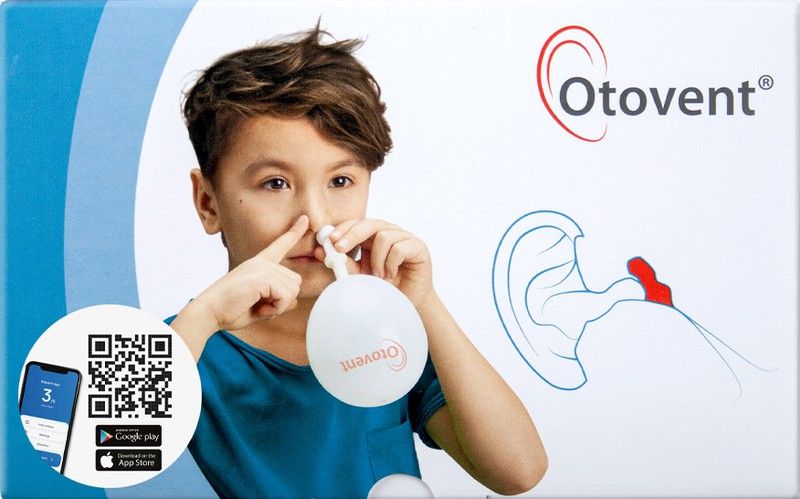
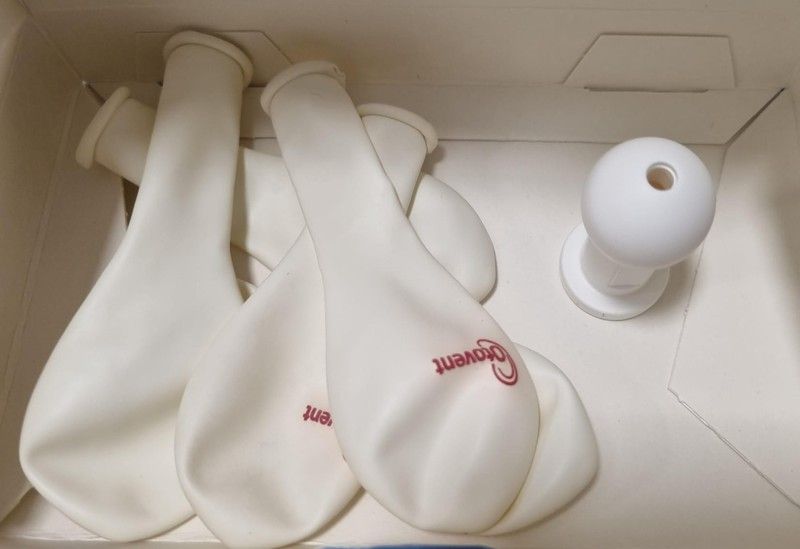
Attaching the Balloon:Make sure the mouthpiece is clean and attach the balloon to the flat end of the mouthpiece.
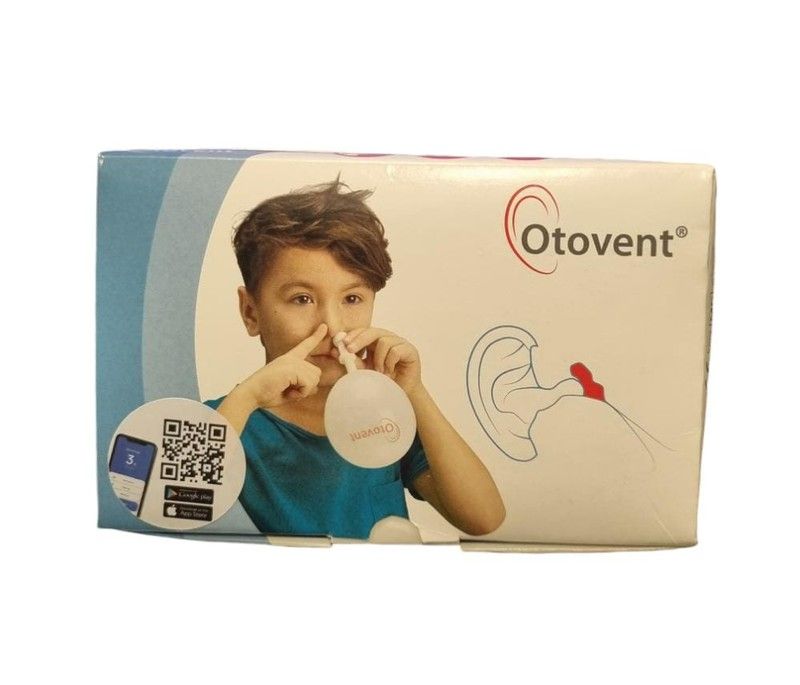
Placement:Hold the rounded part of the mouthpiece firmly against your left nostril. Use your right index finger to compress your right nostril.
Inflation: Take a deep breath in through your mouth, then close your mouth and inflate the balloon by blowing through your left nostril until the balloon is the size of a grapefruit (10-12 cm).
Repeat these steps for your right nostril, following your healthcare professional's instructions for frequency and duration of use.
Warnings and Precautions:
- Allergens: Otovent balloons contain latex. If you are allergic to latex or latex products, consult a healthcare professional before using this device. If you experience allergic symptoms such as rash, itching, difficulty breathing or swelling, discontinue use and consult a doctor.
- Choking Hazard: The product contains small parts, so keep it out of the reach of children. Treatment in children should always be supervised by an adult.
- Appropriate Use of Balloons: Never use toy balloons; only Otovent Balloons should be used in Otovent devices bearing the CE mark.
- Nosebleeds: If you suffer from frequent, minor nosebleeds, any manipulation of your nose, such as blowing your nose or inflating the balloon, can trigger them. Although these are usually harmless, consult a doctor if they persist.
- Sinus Surgery: If you have had sinus surgery, consult your doctor before using Otovent, as it may increase your risk of serious complications such as pneumocephalus.
- Perforated Eardrum and Other Symptoms: If you experience a perforated eardrum, severe headache, severe dizziness, sensitivity to light, or nausea while using Otovent, immediately stop use and consult a doctor.
- Initial Discomfort: Some people may experience discomfort in the ear during inflation. This sensation usually decreases over time and is an indication that the device is working.