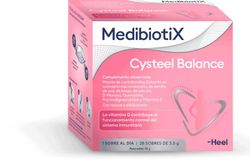
Directions for use:
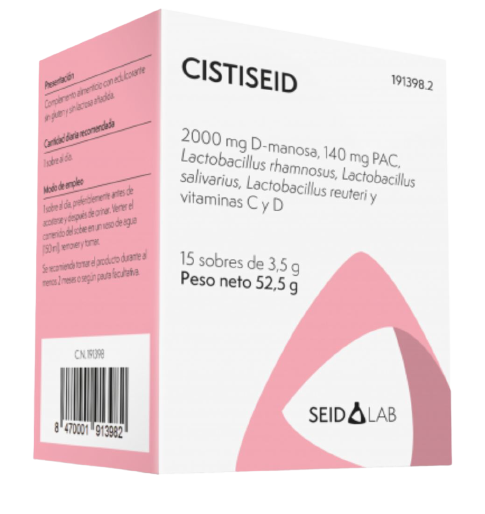
- For the prevention of recurrent cystitis: It is recommended to take 1 sachet of Cistiseid daily, preferably before bedtime and after urinating, for a minimum of three months and up to six consecutive months.
- For the prevention of post-coital cystitis: It is recommended to take 1 sachet of Cistiseid daily, preferably before bedtime and after urinating, for
- For the prevention of cystitis during periods of increased sensitivity: It is recommended to take 1 sachet of Cistiseid daily, preferably before bedtime and after urinating, during the period of risk. Pour the contents of the sachet into a glass of water (150 ml), stir, and drink.
Warnings:
- Food supplements should not be used as a substitute for a varied and balanced diet and a healthy lifestyle.
- Do not exceed the recommended daily dose.
- The product contains polyols, so excessive consumption may have a laxative effect.
- Keep out of reach of young children.
- Store tightly closed in a cool, dry place, below 25°C.
- Best before the expiration date indicated on the package.
- Let's take care of the environment. Do not throw the container in the trash, contribute to its recycling by depositing it at the SIGRE Point of the pharmacy.
Composition:
- Components Per 1 sachet Per 100 g %VRN*
- D-Mannose 2 g – 57.1 g
- Blueberry dry extract 156 mg – 4.4g
- of which PAC 140 mg – 4 g
- Vitamin C 100 mg – 2.8 g 125%*
- Live lactic ferments: 50 mg – 1.4 g
- L. rhamnosus 3 x 10⁹ cfu**
- L. salivarius 1 x 10⁹ cfu
- L. reuteri 1 x 10⁹ cfu
- Vitamin D 10 mcg – 285 mcg 200%*
- *NRV = Nutrient Reference Values per sachet
- **cfu = Colony Forming Units.
Cistiseid's composition includes:
D-mannose: Studies have shown this sugar's mechanism of action on pathogenic bacteria, preventing them from adhering to the urinary tract. These bacteria are then eliminated in the urine, significantly reducing the bacterial load and thus the risk of infection.
The amount of D-mannose used in these studies is 2 grams per day, so it is unknown whether lower doses would be effective.
PACs (cranberry proanthocyanidins): Traditionally used for their beneficial effects on the urinary tract, their mechanism of action is also believed to be through inhibition of the adhesion of pathogenic bacteria in the urinary tract. Recent scientific advances have shown that cranberry extract promotes the development of an environment unfavorable to the growth of the bacteria responsible for these infections.
Live lactic ferments (Lactobacillus rhamnosus, Lactobacillus salivarius, and Lactobacillus reuteri): Interfere with the adhesion, growth, and colonization of the urogenital epithelium by pathogenic bacteria. This interaction contributes to the maintenance and restoration of normal vaginal microflora.
Vitamin C (ascorbic acid) and vitamin D (cholecalciferol): These help normalize urine pH, which can be altered during the infectious process, and contribute to the normal function of the immune system.